
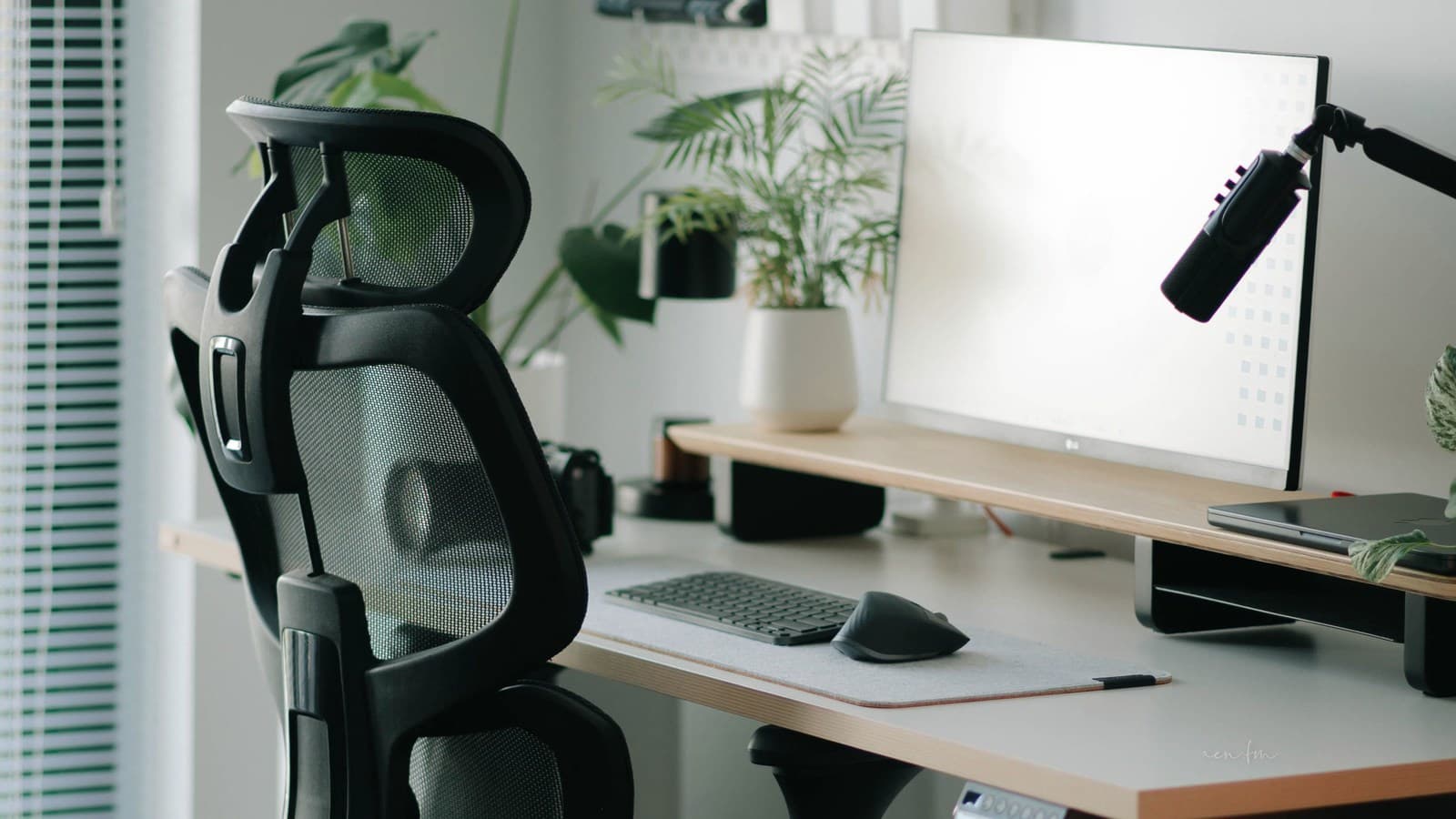
Smart Ergonomic Office Furniture: Turning Model Differences into AI Buying Criteria
Smart ergonomic office-furniture brand
All four structured target pages were cited in retesting. A flagship-model comparison page alone contributed 14 of 20 exact citations across the official-page set.
Results
The Challenge
AI mixed specifications across four models because official pages lacked a unified decision matrix and clear compatibility boundaries.
Our Solution
Gravity industry case 02 · Smart office and home hardware | Core AI-engine crawls +1,098.48% · All 4 new/improved target pages cited
Key result | What changed | Supporting detail |
|---|---|---|
4 / 4 | Every new/improved target page was cited in the retest | All 4 pages addressing model comparison, B2B team pilots, battery runtime, and accessory compatibility were cited. |
14 / 20 | Share contributed by Four Flagship Models Compared | The 4 pages received 20 exact-page citations across 18 answers; one comparison page contributed 70%. |
+1,098.48% | Weekly core dedicated AI-engine crawls surged | 66 in the first project week → 791 in the latest week, alongside improvements in machine readability and crawl depth. |
1. The Challenge: A Complex Model Matrix without an Official Comparison Table Led AI to Mix Up Specifications
For a hardware brand with multiple generations or submodels—such as Standard, SE, Gen, and Pro—the central pre-purchase tasks are comparing models, matching use cases, and checking compatibility:
- “What exactly differs among Standard, SE, Gen, and Pro? Which suits long desk sessions, and which suits hybrid work?”
- “How should a company configure a bulk-purchase pilot for a hybrid team?”
- “How long does the powered lumbar-tracking battery last? Are footrests and headrests compatible across generations?”
Before the work, official product pages relied on large rendered visuals and emotive benefit copy, without an HTML table placing the four models' hard specifications side by side. When buyers asked ChatGPT, Gemini, or Perplexity about differences, AI pieced together scattered third-party reviews and frequently assigned battery runtime, lumbar-motor specifications, or accessory compatibility to the wrong model. That weakened the case for premium-model pricing and complicated business purchasing decisions.
2. Gravity's Work: Four Structured Decision Pages Built around Real Buying Differences
Using the method of starting with real buying questions and connecting product facts, official content, external evidence, and AI answers to find recommendation gaps, Gravity did not ask the client to publish generic updates. We addressed four specific gaps obstructing accurate recommendations and planned and helped deliver 4 new or improved structured pages, all now publicly available:
- Four Flagship Models Compared: a machine-readable, two-dimensional decision matrix covering adjustment dimensions, lumbar-tracking motor specifications, suitable height and weight ranges, price tiers, and intended users for Standard, SE, Gen, and Pro.
- Hybrid-Team Pilot Purchasing Guide: a B2B guide for administration and IT procurement, specifying small-pilot configuration ratios, workstation-fit recommendations, and maintenance boundaries.
- Battery Runtime and Charging FAQ: explicit numbers for days per charge and charging duration, plus low-battery protection and the placement advantages of cordless use.
- Cross-Generation Accessory Compatibility Self-Check: clear boundaries on which models share accessories and which have connector or dimensional restrictions, addressing after-sales concerns.

3. Observed Results: All Four Pages Cited, with 14 of 20 Citations Going to One Comparison Page
3.1 Dedicated AI-Engine Crawls Grew by Nearly Eleven Times the Initial Volume
After infrastructure optimization and the structured pages launched, server-side monitoring of 17 core dedicated AI-engine categories recorded weekly crawls increasing from 66 in the first week to 791 in the latest week, a +1,098.48% increase. OpenAI, Perplexity, and Google retrieval crawlers began frequently fetching the new structured comparison and FAQ pages.
3.2 A 100% Target-Page Citation Hit Rate; the Comparison Page Became a Core Model-Selection Source
In the standardized buying-task retest on October 16, 2026, the pages performed as follows:
Target page | Exact AI citation in retest? | Citation count and platforms | Buying decision supported |
|---|---|---|---|
1. Four Flagship Models Compared | Yes, primary source | 14 citations: Gemini 10 + Perplexity 4 | Clarified the core Standard / SE / Gen / Pro differences and became a leading basis for model-selection answers. |
2. Hybrid-Team Pilot Guide | Yes | 6 citations collectively with the following 2 pages, accounting for the remaining exact official-page citations | Supported enterprise and multi-workstation questions with structured configuration advice. |
3. Battery Runtime and Charging FAQ | Yes | Cited on battery-runtime and power-boundary checks | Supplied accurate official runtime specifications and operating conditions. |
4. Accessory Compatibility Self-Check | Yes | Cited on accessory-selection and after-sales compatibility questions | Addressed cross-model accessory confusion and supported more confident pre-purchase and after-sales decisions. |
Total, 4 target pages | 4 / 4, 100% cited | 20 exact citations across 18 answers | The comparison page contributed 70%, 14/20. |
Methodological insight: for multi-SKU, multi-generation hardware and consumer products, an official model-comparison page with clear audience boundaries can be more useful than a stack of generic brand articles. In this case, the structured official matrix gave AI a clear framework for its selection answers, reflected in the comparison page's concentrated citation results.
4. Further Reading
- Industry overview: AI Is Starting to Make Buying Decisions: GEO Fieldwork Across 10 Brands →
- Other cases: Home energy → · Automotive performance → · Fashion gifting DTC →
Related Cases
Shokz: Microsoft Audience Network Expands Traffic Index from 100 to 650
After Search and Shopping stabilized, Global Gravity introduced Microsoft Audience Network for Shokz, turning Bing media from demand capture into an Audience + Search + Shopping growth model.

HICCPET: Meta and Google Full-Funnel Growth for a US Pet Cleaning Brand
Global Gravity built an audience, creative, CRM, and compliant data activation system for HICCPET, a US pet cleaning brand powered by HOCl + CocoPlex™, lifting best-performing ROAS combinations by 2x+.

Nuna: Meta Cold-Start Growth for an Emotion-Tracking Wearable Brand in North America
Global Gravity built a 0-to-1 Meta acquisition system for Nuna, helping the brand reach positive ROI in 30 days and a 2.3x+ audience-combination ROI within three months.